Why your website needs to load in under three seconds
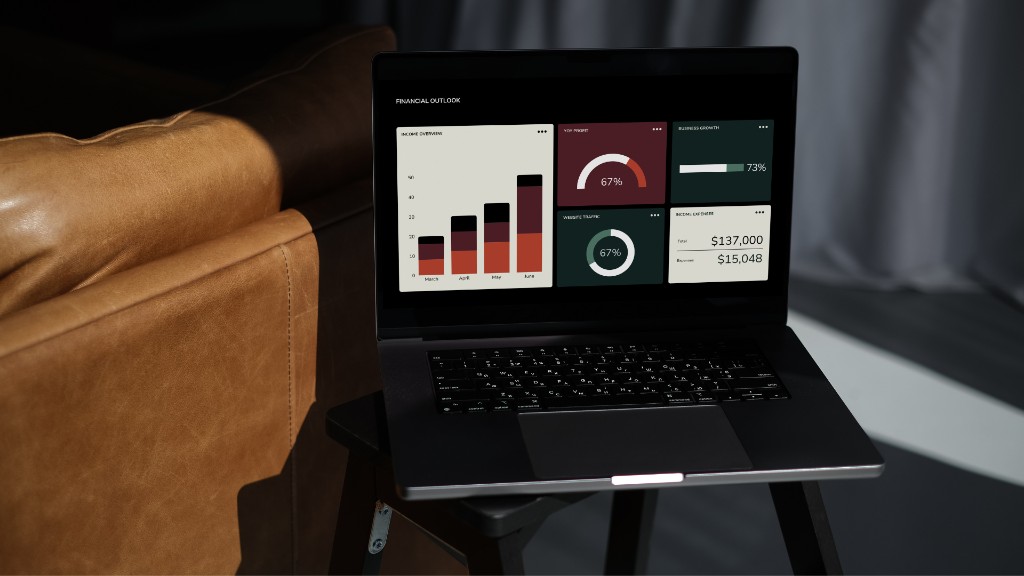
If your website takes more than three seconds to load, most of your visitors are already gone.
Not a little frustrated. Gone. Closed the tab, opened a competitor, moved on. And you will never know it happened.
Page speed is one of those things everyone knows matters and almost nobody actually fixes. Here is why it should be at the top of your list.
What the numbers actually say
Google's own research shows that as load time increases from one second to three seconds, the chance of a visitor leaving jumps by 32 percent. By five seconds, you have lost 90 percent of them. At ten seconds, it is nearly everyone.
For a small business that depends on website enquiries, that is not an abstract stat. It is real customers who found you on Google, clicked your link and left before they even read your headline. what makes a good website homepage
Why most small business sites are slow
It is rarely one big problem. It is usually a pile of small ones nobody ever cleaned up.
Uncompressed images are the single biggest culprit. A homepage with five large, unoptimised photos can take eight seconds to load on a mobile connection, which is how most people are browsing. After that, it is bloated page builder code, too many third-party scripts running in the background, and cheap shared hosting that throttles performance under any load.
These problems get baked in at the point of build and never revisited. Your site was probably slow from day one.
What good actually looks like
A properly built site should load its largest visible element, usually the hero image or headline, in under 2.5 seconds on a standard mobile connection.
This is measured by something called Largest Contentful Paint, which is one of Google's Core Web Vitals. These are the performance signals that feed directly into your search rankings. If your LCP is slow, Google notices. And it ranks you accordingly.
Getting it right requires:
- Images that are compressed and correctly sized before upload - Minimal third-party scripts, analytics, chat widgets and cookie banners all add weight - Clean, efficient code, not the bloated output of a drag-and-drop builder - Good hosting with a content delivery network serving assets from nearby servers
How to check your site right now
Go to pagespeed.web.dev and enter your URL. It is free, it takes 30 seconds and it will tell you exactly how your site performs on mobile and desktop, with a specific list of what is slowing it down.
- Score below 50: you have a significant problem - Score 50 to 89: room for meaningful improvement - Score 90 or above: you are in good shape
Most small business sites score between 20 and 60 on mobile. Most well-built sites score above 90. The gap matters.
What to do if your score is low
If you are on Wix, Squarespace or a poorly configured WordPress, your options are limited. These platforms have performance ceilings that are genuinely difficult to work around. You can optimise images and remove plugins, but you are fighting the platform itself.
The cleanest fix is a properly built site from the ground up, one where performance is considered at every layer, not patched on afterwards. why Makeproper does not use page builders
That is how Makeproper builds every website. If your site is slow and you are not sure what it is costing you, get in touch. We will take a look and give you a straight answer. five things every small business website needs in 2026